Random Generator
A random generator picks results by chance so you do not have to choose. Spin the wheel, roll dice, draw numbers or letters, split a group or run a Secret Santa draw. Every pick uses your browser’s cryptographic random source, so each option has an equal chance and nothing is sent to a server.
Nobody draws themselves. Results stay on this screen and are hidden until each person taps their own name. Nothing is emailed or stored.
More generators
Each page opens with its own generator and follows with tips, examples and FAQ. Pages marked “soon” are in the publishing plan and go live on their dates.

How the picks stay fair
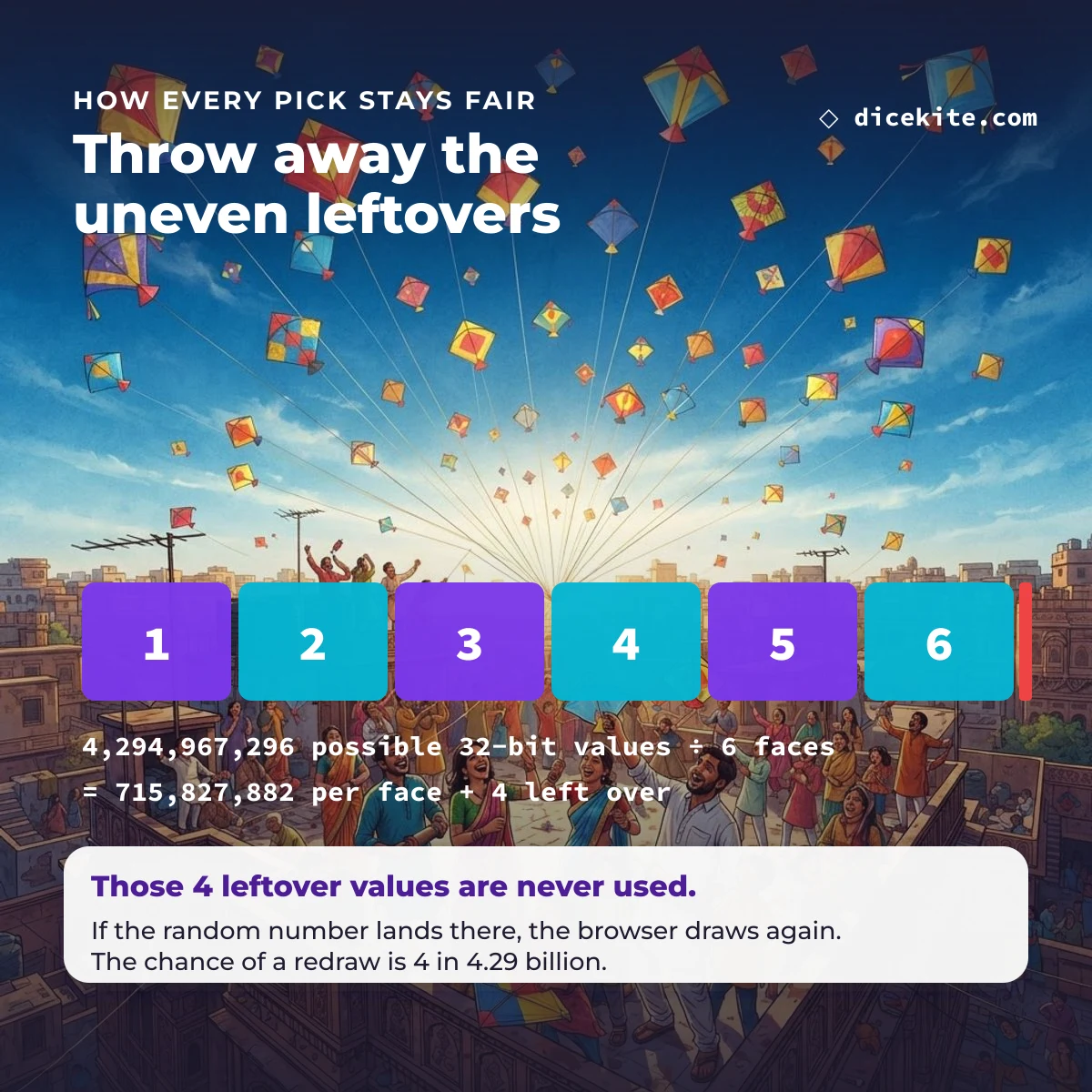
Browsers ship with a cryptographic random number generator that is designed to be unpredictable. Dicekite asks it for random 32-bit values and turns them into your range. A plain remainder would slightly favor small numbers, so the generator throws away values from the uneven tail and asks again. This is called rejection sampling, and it gives every number in your range exactly the same probability.
Which tool for which job
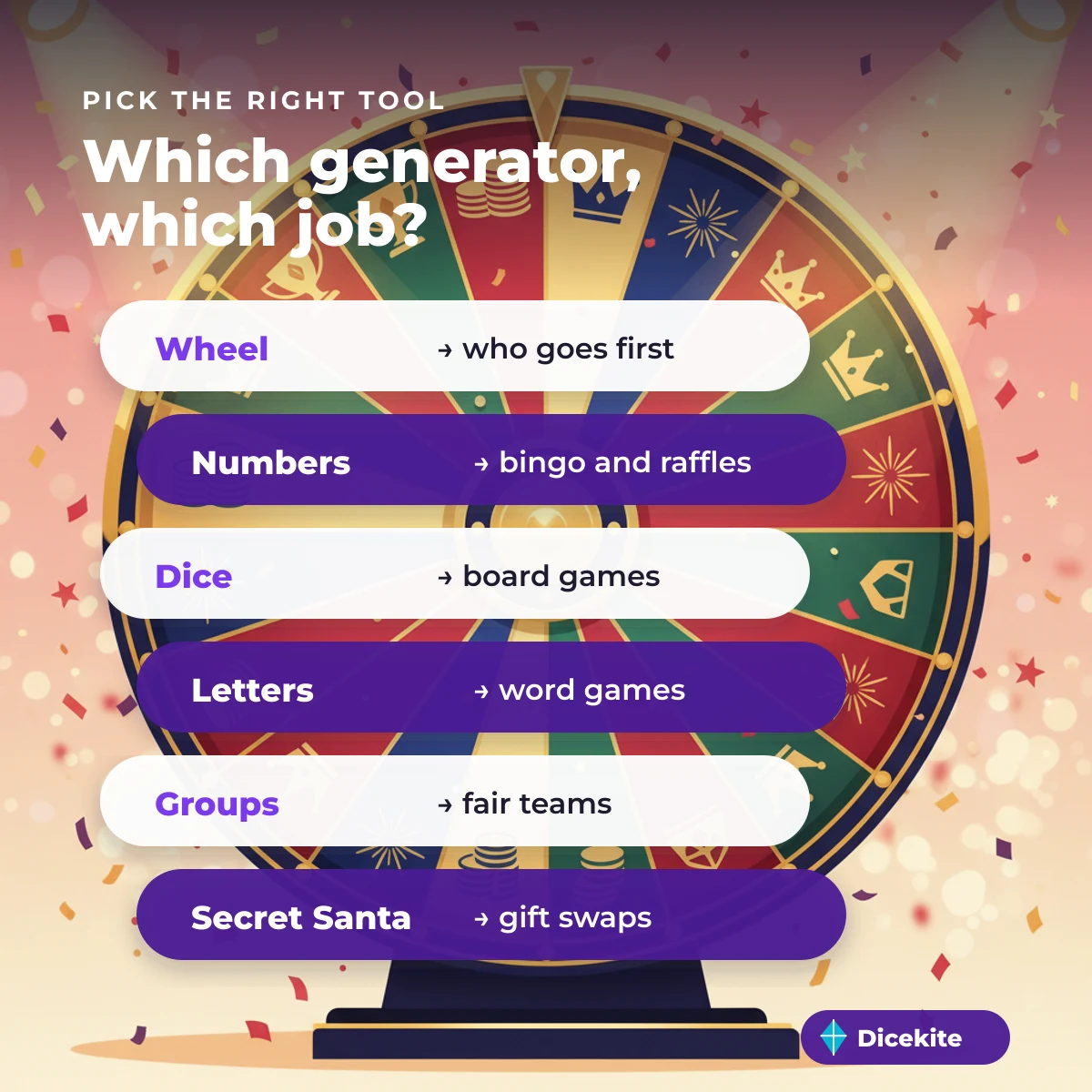
| Tool | Best for | How it picks |
|---|---|---|
| Wheel | Yes or no, choosing who goes first | One random pick from your list |
| Numbers | Raffles, ranges like 1–100, lottery-style games | Random values in range, optional no repeats |
| Dice | Board games, tabletop roleplaying | Each die rolled on its own |
| Letters | Word games, Scattergories, Pictionary starts | Random letters, optional vowels or consonants |
| Groups | Classroom teams, project pairs | Fisher–Yates shuffle, then split |
| Secret Santa | Gift exchanges | Shuffle until nobody has themselves |
Dice odds at a glance
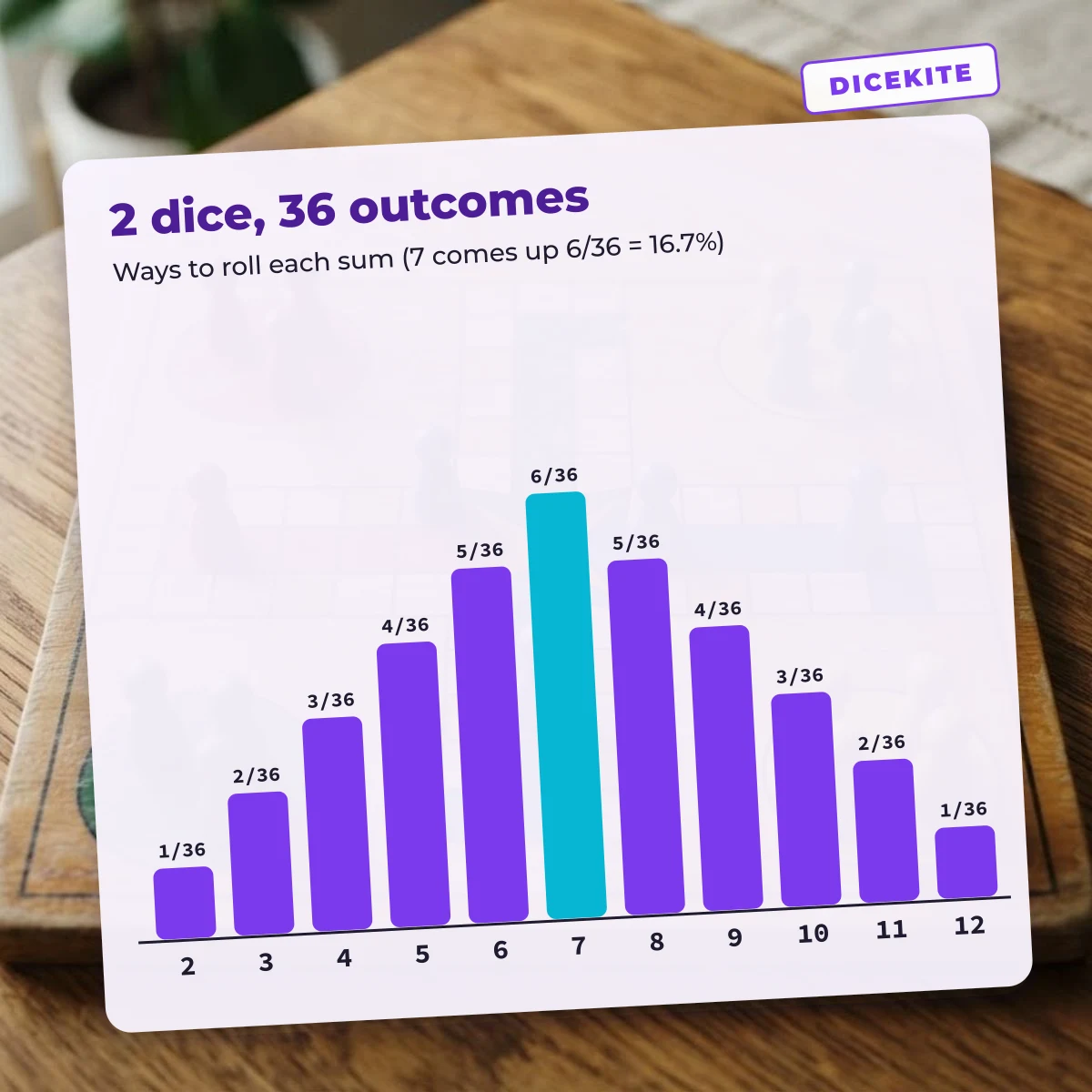
With two six-sided dice there are 36 equally likely outcomes, but only one way to roll a 2 and six ways to roll a 7. That is why 7 shows up most often.
| Sum of 2d6 | Ways | Chance |
|---|---|---|
| 2 or 12 | 1 each | 2.8% each |
| 3 or 11 | 2 each | 5.6% each |
| 4 or 10 | 3 each | 8.3% each |
| 5 or 9 | 4 each | 11.1% each |
| 6 or 8 | 5 each | 13.9% each |
| 7 | 6 | 16.7% |
Tips for fair draws
- Decide the rule before you press the button, such as “best of three” or “remove the winner”.
- Do not spin again just because you dislike the result. A re-spin makes the draw unfair to everyone else.
- For a Secret Santa, agree on a price limit and a date first, then draw.
- For teams, use the group tool, then swap one or two people by agreement if skill levels are lopsided.
Frequently asked questions
Are the results really random?
The generators use crypto.getRandomValues, the cryptographic random source built into your browser, instead of Math.random. Picks from a range use rejection sampling so every value has exactly the same chance.
Does the wheel favor the slice where it stops?
No. The winning slice is chosen first with the random source and the wheel is then animated to land on it. The spin is for show; the pick itself is not influenced by animation timing or how hard you press.
What is a derangement in Secret Santa?
A derangement is a shuffle where nobody draws their own name. The generator reshuffles until no one is matched with themselves. For larger groups, about 37 percent of random shuffles qualify, so it finds one quickly.
Can I exclude partners or people from each other?
Not yet. For couples or families who should not draw each other, run the draw, then rerun it until the result suits you, or split the group into smaller draws.
Is my list of names stored?
No. Names stay in your browser tab. Nothing is saved or sent to a server, and Secret Santa results are not emailed.
Can I use this for gambling?
No. Dicekite is for games, classrooms, teams and gift exchanges. It is not a gambling service.
Did this fly?
Tell us if the generator worked for you or what to tweak.
Thank you! Your note has taken off.